The last six chapters of Exodus are entirely consumed with the details of constructing the Tabernacle. Earlier chapters likewise devote tremendous space to this topic. Clearly, God's dramatic and (humanly speaking) revolutionary act of liberation in the exodus was not an end in itself. The freedom gained for Abraham's descendants only matters within the relationship with the Lord that it fosters. This supreme example of human liberation from bondage points beyond itself to something else.
Likewise in Acts 2:42-47, the mutual aid and sharing of goods seen there--a wonderful alternative community established right in the midst of the vast empire of Rome--is not simply a subversive politico-economic option. Mutual aid in Acts occurs among those who believed, and is a portrait of their belief. The economics of this early Christian community were an equal part of worship alongside prayer and teaching.
The politics of the church is a politics of worship. Because of this it will always stand starkly apart from its atheistic or agnostic counterparts. My thoughts are just beginning to stir, but it seems that asking the questions, "How does our political existence inform our worship?" and "How does our worship inform our politics?" does not go far enough. The questions themselves are a sign that we have grossly bifurcated the intrinsic union of worship and politics. Our worship is necessarily political, and if our politics have naught to do with worship, then we are not Christian in our politics.
I know that not very many people read this, but since you've read this far--thanks!--do you have stories or know of Christian congregations or communities that exemplify a political existence that is worship? As my wonderful professor Christine Pohl has often noted, sharing stories of practices well done is a very good thing for us; I would much love to hear yours. Please share!
Showing posts with label Politics. Show all posts
Showing posts with label Politics. Show all posts
Thursday, September 30, 2010


Sunday, July 25, 2010
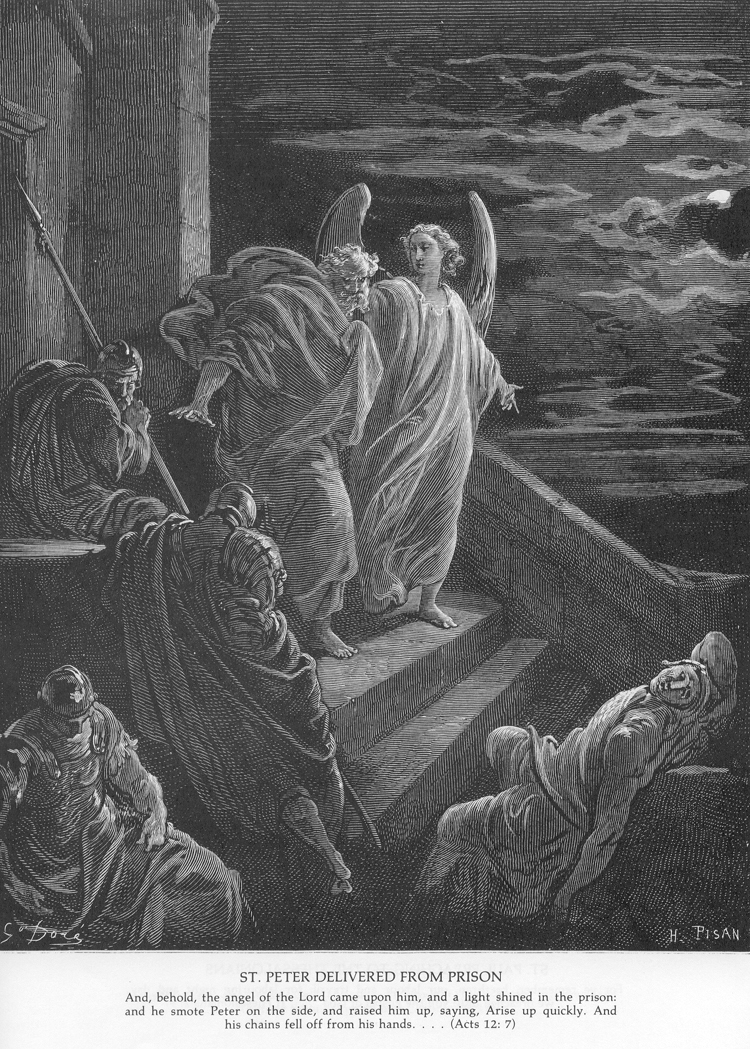
Prayer as a Practice for the Christian Political Body: Acts 12
Christians are in a situation of conflict in this world, and it must be so. This is not so much because we are to seek out conflict and actively pursue war with some enemy, but simply because we are aligned with Christ, and the world has rejected his claims to lordship. As he warned, because they have rejected him so also they reject us if we are truly his. (Perhaps here is the secret of rejoicing in suffering for Christ, for we may then be reassured that we are indeed with our Lord!)
In Acts 12, this innate conflict is brought to the fore, and personified in Herod and the early believers. The focus is not on the direct, violent conflict of prison and martyrdom, but on a deeper conflict of character (rooted ultimately in the parties' respective responses to Jesus and the Spirit). Herod is described in personal, individual terms: He had James killed. He seized Peter, put him in prison, handed him to squads of guards, and made further plans. He acts out of his own pride, for the sake of other people's favor, so that he might gain power. The church, though, is a corporate body acting out of faith and the life of the Spirit for the sake of Christ, that the gospel might be proclaimed.
 Acting in faith beyond what they know, the church prays intensely for Peter when he is arrested by Herod. This is an outstanding picture of prayer as a practice--an activity that properly enacts the faith of the church, even when those in the church cannot wholly comprehend that faith in their minds.
They do know something: they know that an angel of the Lord has already freed Peter and others from prison once--they know the miraculous power of the God they serve--they know enough. But they also know the "severe persecution" that broke out with the stoning of Stephen, and the scattered, diasporic nature of their body as a result. They know that James, one of the three disciples closest to Jesus, was just killed by this same Herod. and that Peter's arrest rose out of the resultant crowd-pleasing blood-lust. They do not know of any earthly reason for Peter to escape death at Herod's hand.
They do not know, but still they pray. They may think Rhoda, the maid, is off her rocker when she says Peter is free and standing at the door, but yet they still bring the situation to the Lord in prayer. Despite their natural uncertainty and faltering hope, they pray fervently.
Their practice of prayer surges ahead of their cognition. Firm action precedes certain belief, and because God is faithful to his people (in this case he rescues Peter), their belief is brought up to speed with their faithful practice. As in Acts 4, the strength of the powers that be is stripped away, revealed as dross. Herod's end is follows this story; his failure to recognize his own limitation compared with God's ultimacy leads to his being struck down, eaten by worms, and dying. He practiced self-sufficient pride, and his end was a horrible death alone despite the adulation of the crowd.
Our regular practices in the church are essential to our beliefs and faith. In them, we perform our faith, not in the sense of acting like people would if they believed, but in the sense of giving flesh to belief. In the face of powers and principalities, floods and earthquakes, depression and disease, in the face of unemployment, persecution, or just plain ol' existential angst, our minds are given many reasons for concern, and our hearts may grow faint within us. In our culture and its obsession with being true to thyself and avoiding hypocrisy at all costs, we are urged at these times to act like we've given up--and thus, we do give up. The church's response in Acts 12, however, is of a different kind. They may not know that God will free Peter, but they know God, for they have seen Jesus. So they call on him in prayer to act on Peter's behalf. They enflesh faith in their practice of prayer, and their cognitive belief structures can only race to catch up--to explain what has already happened.
The interplay of belief and practice is mysterious indeed, but in encounters with God such as these, the division disappears, and all that is left is the church's life of faith, partnered with Christ to live and spread his Word in the world.
In Acts 12, this innate conflict is brought to the fore, and personified in Herod and the early believers. The focus is not on the direct, violent conflict of prison and martyrdom, but on a deeper conflict of character (rooted ultimately in the parties' respective responses to Jesus and the Spirit). Herod is described in personal, individual terms: He had James killed. He seized Peter, put him in prison, handed him to squads of guards, and made further plans. He acts out of his own pride, for the sake of other people's favor, so that he might gain power. The church, though, is a corporate body acting out of faith and the life of the Spirit for the sake of Christ, that the gospel might be proclaimed.
They do know something: they know that an angel of the Lord has already freed Peter and others from prison once--they know the miraculous power of the God they serve--they know enough. But they also know the "severe persecution" that broke out with the stoning of Stephen, and the scattered, diasporic nature of their body as a result. They know that James, one of the three disciples closest to Jesus, was just killed by this same Herod. and that Peter's arrest rose out of the resultant crowd-pleasing blood-lust. They do not know of any earthly reason for Peter to escape death at Herod's hand.
They do not know, but still they pray. They may think Rhoda, the maid, is off her rocker when she says Peter is free and standing at the door, but yet they still bring the situation to the Lord in prayer. Despite their natural uncertainty and faltering hope, they pray fervently.
Their practice of prayer surges ahead of their cognition. Firm action precedes certain belief, and because God is faithful to his people (in this case he rescues Peter), their belief is brought up to speed with their faithful practice. As in Acts 4, the strength of the powers that be is stripped away, revealed as dross. Herod's end is follows this story; his failure to recognize his own limitation compared with God's ultimacy leads to his being struck down, eaten by worms, and dying. He practiced self-sufficient pride, and his end was a horrible death alone despite the adulation of the crowd.
Our regular practices in the church are essential to our beliefs and faith. In them, we perform our faith, not in the sense of acting like people would if they believed, but in the sense of giving flesh to belief. In the face of powers and principalities, floods and earthquakes, depression and disease, in the face of unemployment, persecution, or just plain ol' existential angst, our minds are given many reasons for concern, and our hearts may grow faint within us. In our culture and its obsession with being true to thyself and avoiding hypocrisy at all costs, we are urged at these times to act like we've given up--and thus, we do give up. The church's response in Acts 12, however, is of a different kind. They may not know that God will free Peter, but they know God, for they have seen Jesus. So they call on him in prayer to act on Peter's behalf. They enflesh faith in their practice of prayer, and their cognitive belief structures can only race to catch up--to explain what has already happened.
The interplay of belief and practice is mysterious indeed, but in encounters with God such as these, the division disappears, and all that is left is the church's life of faith, partnered with Christ to live and spread his Word in the world.
Saturday, May 22, 2010
The Church as Political Body--Acts 4:32-5:42
Political is hardly even the right word for it. Acts presents an engagement with the power structures of this world so far from the typical content of "politics" that it barely resides in the same semantic domain. And yet inevitably, inescapably, it is right there. The church as a political body is on full display in this passage. The church does not combat the powers here, in the ways the power themselves enter combat, but this is rather a profound example of disarming the powers.
The central focus is on the life and teaching of the new body of believers (4:32-37), not on their approach to political concerns. Because the powers' demands for love and exclusive, however (as are the Lord's), their jealously is inevitably provoked. The strength within this new body is so real, compelling, and different, that the authorities respond with force in arms, arrest, plans to drag them before the council.
But then comes this little story of the angel of the Lord opening the prison doors, and of renewed preaching in the temple. This tiny little episode is barely a bump in the plot, for a few short hours later the apostles are dragged right back in again, to the same situation.
Or are they? Is the whole point just to give them a couple of extra hours of teaching? Surely it matters that this teaching occurred, for the apostles were specifically commanded to do so by the releasing angel; but it seems that the importance of this plot turn lands more on the ongoing nature of the church's mission than on the particular hours of teaching that morning. In the face of anything, the Lord's work goes on (this is seen in full effect in 28:31, where Paul, under house arrest, is said to preach "without hindrance.")
To return to the question, the apostles do not return to the same situation. Same place, same people, same exercise of authority, but not the same situation at all. In vv22-24, the council is utterly perplexed by their own failure to exert their authority. They are not converted, for they fail to recognize the Lord at work in the empty prison cells. They are not "defeated" exactly, for they retain their positions of power. They are entirely perplexed, and in their perplexity their positions of power are shown up as less than absolute, and their demands for loyalty are revealed as undeserving of a positive response. They are disarmed.
The situations at the council in 5:21 and 5:26 are very, very different indeed. As the powers are disarmed, the power of God at work in the church (and elsewhere) is able to show forth more clearly, and the missionary task of Christ's followers is able to continue unhindered; it cannot be arrested.

To further push the point home, this disarming is not even the main point of this passage or book. In the primary point, which is the message about Christ and its proclamation, the powers and their destiny are an incidental side-note. Even as a topic of concern, they are temporal at best. I believe this has profound implications for our political existence in a democratic society, but further reflection is for another day. Instead, here I can conclude only as this passage does in Acts 5:42. May it be so among us as well.
"And every day in the temple and at home they did not cease to teach and proclaim Jesus as the Messiah."
The central focus is on the life and teaching of the new body of believers (4:32-37), not on their approach to political concerns. Because the powers' demands for love and exclusive, however (as are the Lord's), their jealously is inevitably provoked. The strength within this new body is so real, compelling, and different, that the authorities respond with force in arms, arrest, plans to drag them before the council.
But then comes this little story of the angel of the Lord opening the prison doors, and of renewed preaching in the temple. This tiny little episode is barely a bump in the plot, for a few short hours later the apostles are dragged right back in again, to the same situation.
Or are they? Is the whole point just to give them a couple of extra hours of teaching? Surely it matters that this teaching occurred, for the apostles were specifically commanded to do so by the releasing angel; but it seems that the importance of this plot turn lands more on the ongoing nature of the church's mission than on the particular hours of teaching that morning. In the face of anything, the Lord's work goes on (this is seen in full effect in 28:31, where Paul, under house arrest, is said to preach "without hindrance.")
To return to the question, the apostles do not return to the same situation. Same place, same people, same exercise of authority, but not the same situation at all. In vv22-24, the council is utterly perplexed by their own failure to exert their authority. They are not converted, for they fail to recognize the Lord at work in the empty prison cells. They are not "defeated" exactly, for they retain their positions of power. They are entirely perplexed, and in their perplexity their positions of power are shown up as less than absolute, and their demands for loyalty are revealed as undeserving of a positive response. They are disarmed.
The situations at the council in 5:21 and 5:26 are very, very different indeed. As the powers are disarmed, the power of God at work in the church (and elsewhere) is able to show forth more clearly, and the missionary task of Christ's followers is able to continue unhindered; it cannot be arrested.

To further push the point home, this disarming is not even the main point of this passage or book. In the primary point, which is the message about Christ and its proclamation, the powers and their destiny are an incidental side-note. Even as a topic of concern, they are temporal at best. I believe this has profound implications for our political existence in a democratic society, but further reflection is for another day. Instead, here I can conclude only as this passage does in Acts 5:42. May it be so among us as well.
"And every day in the temple and at home they did not cease to teach and proclaim Jesus as the Messiah."
Subscribe to:
Posts (Atom)
